Shop Now
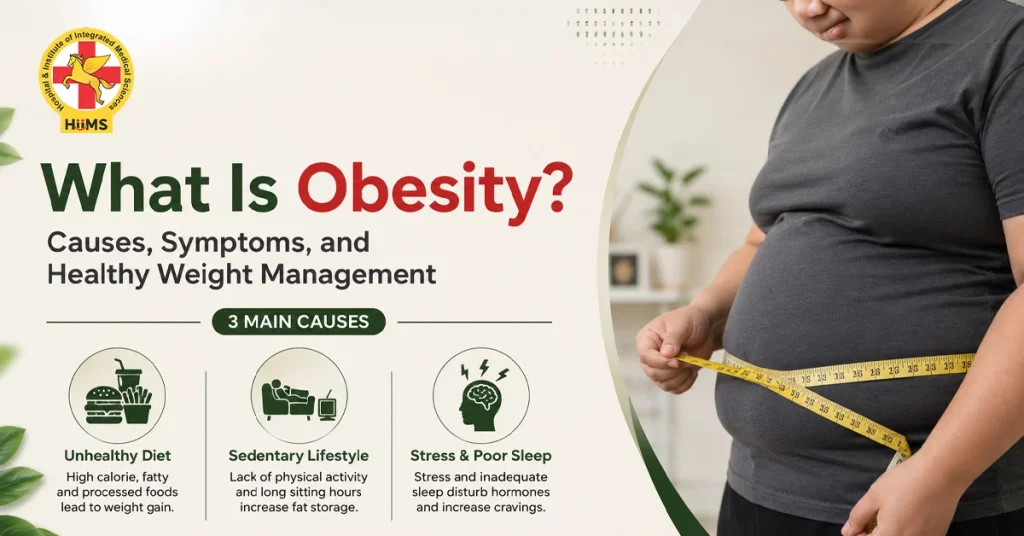
Two people can look the same size and have completely different health risks underneath, which is part of why understanding what is obesity actually means, medically, matters more than just eyeballing a mirror. Obesity isn’t simply about appearance; it’s classified as a chronic, complex condition affecting metabolism, hormones, and long-term health, currently affecting around 2 in 5 adults in the US alone.
This blog breaks down what obesity actually is, what causes it, the symptoms worth watching for, and how Ayurveda and everyday healthy habits genuinely support long-term weight management.
What is Obesity, Medically Speaking?
Doctors define what is obesity fairly specifically, excessive body fat that’s genuinely bad for your health, usually measured with BMI. Cross 30, you’re in obesity territory.
Land between 25 and 29.9, that’s overweight. But BMI isn’t perfect either; it can’t actually tell fat from muscle, so someone lifting weights regularly might show a “high” number without carrying much extra fat at all. That’s exactly why doctors look past the number itself and check other markers too.
Signs of Obesity and Obesity Symptoms Worth Recognising
Obesity itself doesn’t always cause specific symptoms, but a few common signs of obesity and obesity symptoms are worth paying attention to:
- Increased body weight relative to height and frame
- Fatigue that doesn’t match your actual activity level
- Shortness of breath during routine activities
- Joint pain, particularly in weight-bearing joints like knees and hips
- Waist circumference significantly higher than typical guidelines
What Causes Obesity? Obesity Causes Beyond Just Diet
Ask someone what causes obesity, and “overeating” comes up first, almost every time. Not wrong exactly, just incomplete. Obesity causes run deeper than that:
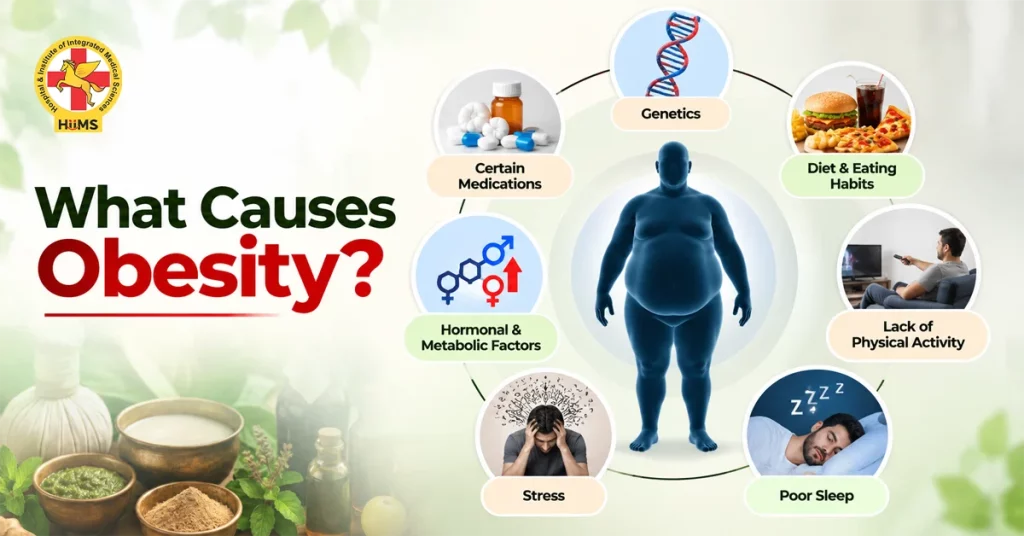
- Genetics, some bodies just hold onto fat more easily, and it runs in families
- Hormones and metabolism both quietly shape appetite and energy storage
- Actual behaviour, diet quality and how much you move day to day
- Sleep and stress both mess with the hormones that control hunger
- Certain medications, some genuinely cause weight gain as a side effect
Put all that together, and “eat less, move more” starts looking like advice that’s technically true but missing half the picture. Appetite and metabolism aren’t things willpower alone can override.
Ayurvedic Treatment for Obesity: Medoroga and Kapha Imbalance
Ayurveda refers to obesity as Medoroga, tracing it back to weakened digestive fire, called Agnimandya, combined with excess Kapha dosha, the energy associated with heaviness and stagnation in the body. If digestion is chronically slow, then food is not properly converted into usable energy, but rather accumulates as excess fat tissue, or Ama, clogging up the body’s metabolic pathways. Ayurvedic obesity treatment works on rekindling this digestive fire rather than mere food deprivation:
- Herbs traditionally used for supporting fat metabolism like Guggul
- Triphala with warm water to support digestion and gentle detoxification
- Punarnava helps in relieving fluid retention and helps in maintaining overall metabolic balance.
- Panchakarma-based detox therapies, including Virechana, to clear accumulated Ama where appropriate
These are generally most effective when paired with consistent dietary correction rather than used as a standalone fix, and it’s worth checking with a practitioner before starting any of them.
Looking for personalised support? Contact Jeena Sikho HiiMS to learn more about our healthy weight management approach.

Healthy Weight Management: Diet Habits That Genuinely Work
Sustainable obesity management comes down to habits you can actually maintain, not short-term restriction. A few diet-focused habits genuinely supported by research:
- Build meals around whole, unprocessed foods, vegetables, fruits, whole grains, and lean protein
- Prioritise protein at each meal, since it increases fullness and helps preserve muscle mass during weight loss
- Practise portion control and mindful eating, slowing down and paying attention to hunger cues, rather than strict calorie counting
- Limit added sugar, refined carbohydrates, and liquid calories like sugary drinks
- Drink water before meals, and aim for roughly 2-2.5 litres daily, which can genuinely help reduce overall intake
Healthy Weight Management: Movement, Sleep, and Consistency

Diet alone rarely tells the whole story. A few other habits matter just as much for long-term obesity management:
- Aim for roughly 150 minutes of moderate exercise weekly, combining cardio with some strength training to protect muscle mass
- Choose activities you genuinely enjoy, walking, swimming, dancing, cycling, since enjoyment is what actually keeps people consistent long-term
- Prioritise sleep, as poor sleep disrupts the hormones that regulate hunger and fullness
- Manage stress actively, since chronic stress affects cortisol levels and can influence how and where the body stores fat
- Track progress loosely through a food and activity diary, which research shows genuinely helps people stay on course
Aiming for gradual progress, roughly 1-2 pounds a week if weight loss is the goal, tends to be far more sustainable than extreme, rapid changes, which often lead to muscle loss and rebound weight gain.
How Jeena Sikho HiiMS Supports Healthy Weight Management
At Jeena Sikho HiiMS, weight management support typically combines a personalised, pH-balanced diet plan tailored to your specific body constitution; herbs and spices traditionally used to support digestion and reduce Kapha buildup; and guidance on daily routine, sleep, and stress management, since all three genuinely affect metabolic balance.
Panchakarma-based detox therapies are also offered where appropriate, aimed at easing internal toxin buildup and supporting the body’s natural metabolic processes over time.
Conclusion
Understanding what is obesity as a genuine, complex condition, not a matter of willpower alone, changes how you approach managing it, with patience, consistency, and support that actually fits your body rather than quick fixes.
If you want a personalised, Ayurvedic approach to healthy weight management built around your own constitution, Jeena Sikho HiiMS experts can walk you through what that could look like. Book a VOPD session with us now!

FAQs
1. Is BMI genuinely the best way to measure obesity?
It’s the tool doctors reach for most, but it can’t tell fat from muscle, so other health markers usually come into play alongside it.
2. Does genetics actually decide whether someone becomes obese?
It shapes the odds, definitely, but lifestyle and environment still carry real weight in the outcome, no pun intended.
3. What’s a realistic pace for losing weight safely?
Somewhere around 1-2 pounds a week. Push faster than that, and you risk muscle loss along with the fat, plus a higher chance of gaining it all back.
4. Can bad sleep really mess with your weight?
Yes, genuinely. Poor sleep throws off the hormones controlling hunger and fullness, making the whole process harder than it needs to be.
5. How does Ayurveda’s take on obesity differ from the usual explanation?
It comes down to weak digestion and excess Kapha in Ayurveda’s view, so treatment leans on reviving that digestive fire alongside fixing the diet itself.