Shop Now
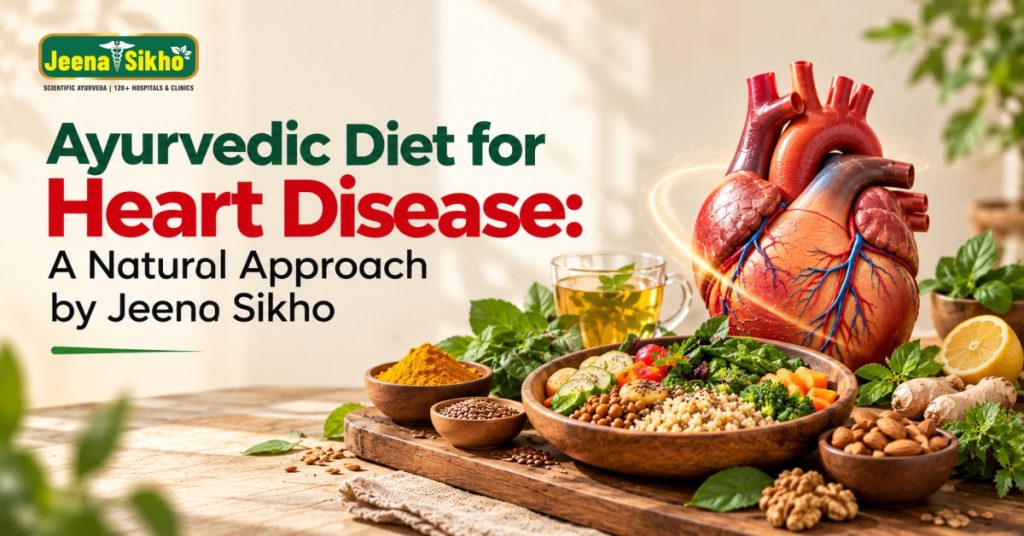

Your heart responds well to daily care, and food is a simple way to give it. In fact, Ayurveda has treated food as medicine for thousands of years. So, an Ayurvedic diet for heart disease focuses on fresh, simple and balanced meals. Small changes on your plate can ease the load on your heart over time.
This matters a lot in India today. A large study on Indian states found that heart and blood vessel diseases caused 28.1% of all deaths in 2016. Back in 1990, the figure was only 15.2%. Moreover, the study named poor diet as the biggest risk behind this rise. This blog explains how food affects the heart and which foods help. It also shows how Jeena Sikho brings this natural approach to heart care.
Role of Diet in Heart Disease
Every meal affects your heart. For example, too much salt raises blood pressure. Fried and processed foods raise bad cholesterol. Similarly, sugar and refined flour add belly fat and raise triglycerides. Over the years, this strains the arteries.
On the other hand, the right food can protect the heart. A Chennai study of 983 adults looked at how much fruit and vegetables people ate. Those who ate the most had lower blood pressure, a smaller waist and lower cholesterol. However, the average person ate only 265 grams a day, well below the 400 grams that WHO suggests.
Ayurveda explains this link between food and the heart in its own way.
Worried that your eating habits are affecting your heart? Talk to our experts for practical guidance.

How Ayurveda Views Heart Health
Ayurveda calls the heart Hridaya. It sees the heart as the seat of Ojas, our vital strength, and Prana, our life energy.
According to Ayurveda, three forces keep the heart healthy. Vyana Vata drives blood flow through the body. Sadhaka Pitta links the heart with the mind and emotions. Meanwhile, Avalambaka Kapha supports and protects the heart.
However, problems start when digestion or Agni, becomes weak. Then, food doesn’t digest fully and forms Ama, a sticky waste. Over time, Ama builds up in the body’s channels, much like deposits in the arteries. Therefore, Ayurveda for heart disease starts with strong digestion, fresh food and a steady routine. That is why food is at the centre of Ayurvedic heart care.
Ayurvedic Diet for Heart Health: Foods That Support Your Heart
An Ayurvedic diet for heart health is simple, fresh and easy to digest. Here are some foods that support your heart every day.
Amla
Amla is one of the richest natural sources of vitamin C. It also contains antioxidants that protect blood vessels. Besides, Ayurveda calls amla a Rasayana, or rejuvenating food.
Garlic (Lahsun)
Indian kitchens have long used garlic for heart health. It traditionally supports smooth blood flow and healthy cholesterol. So, add one or two crushed cloves to your daily meals.
Arjuna Bark Tea
Arjuna is Ayurveda’s best-known heart herb. Traditionally, people boil its bark in water or milk to make a mild tea. However, it can interact with heart medicines, so take it only on a doctor’s advice.
Whole Grains and Millets
Bajra, jowar, ragi and oats are rich in fibre. As a result, they help keep cholesterol and blood sugar steady. Try swapping maida rotis for millet rotis a few times a week.
Seasonal Vegetables and Leafy Greens
Lauki (bottle gourd), spinach and methi are light and easy to digest. They are also rich in potassium, which helps balance the effects of salt. In particular, Ayurveda values lauki for a calm heart.
Nuts and Seeds
Walnuts, almonds and flaxseeds give healthy fats. Still, they are rich in calories, so a small handful a day is enough.
Heart-Friendly Spices
Turmeric, ginger, cinnamon and cumin support digestion and strengthen Agni. In addition, they add flavour, so you need less salt in your meals.
Just as some foods support the heart, others quietly harm it.
Not sure which foods suit your body and heart? Get a personalised diet plan from our experts.

Foods to Limit for a Healthy Heart
Therefore, reducing a few foods can have a significant impact.
- Excess salt and pickles: Too much salt makes the body hold water. As a result, blood pressure rises.
- Fried food and vanaspati: These raise harmful cholesterol. They also slow down digestion.
- Sugar and maida: Both add belly fat and raise triglycerides. Over time, this strains the heart.
- Packaged food: Chips, biscuits and instant foods hide salt and preservatives.
- Cold, stale or reheated food: Ayurveda says such food weakens Agni. Instead, choose freshly cooked meals.
In Ayurveda, how and when you eat matters just as much as what you eat.
Ayurvedic Eating Habits That Protect Your Heart
A natural diet for heart health also depends on daily eating habits.
- Eat fresh, warm meals: Warm, home-cooked food is easier to digest. Also, it contains less hidden salt.
- Make lunch your main meal: Agni is strongest at midday. So, your body digests a bigger meal better at this time.
- Eat dinner early: Finish dinner by 7 or 8 pm. This gives your body time to digest before sleep.
- Eat only when hungry: Eating again before your last meal has digested adds to Ama. Therefore, wait for real hunger.
- Eat mindfully: Chew slowly and avoid screens so you notice when you are full.
Jeena Sikho builds these same principles into a full heart care plan.
A Natural Approach to Heart Care at Jeena Sikho HiiMS Bengaluru
Jeena Sikho HiiMS Bengaluru is an integrated hospital that combines Ayurveda, Naturopathy, Homeopathy, and modern science. It focuses on the root cause of a disease. HiiMS takes this food-first approach further and pairs it with Ayurvedic therapies. Here, an Ayurvedic diet for heart disease is one part of a complete plan made for each patient.
Hriday Basti
Therapists place a ring of herbal dough on the chest and fill it with warm medicated oil. Ayurveda traditionally uses this therapy to support circulation and ease stress on the heart.
pH-Balanced Diet
Patients follow a fresh, plant-based diet that is low in processed food. This diet is rich in fresh fruits and raw vegetables. Moreover, doctors plan it around each person’s reports.
Panchakarma
Panchakarma includes Ayurveda’s classic cleansing therapies. They aim to clear toxins, and the doctor chooses the right one after an assessment.
Herbal Support
Doctors may add herbs like Arjuna, Garlic and kutki. However, they decide the herb and dose for each patient.
Mind and Body Healing
Yoga, pranayama and meditation help reduce stress. This matters because stress raises blood pressure and strains the heart.
Research supports this lifestyle approach. In an Indian trial, 42 men with heart disease either joined a yoga-based programme or received usual care for one year. The programme combined yoga, diet control and moderate exercise. As a result, the yoga group had fewer chest pain episodes and better exercise capacity. Moreover, only one person in that group needed a heart procedure, compared with eight in the other group.
Want an Ayurvedic heart care plan? Book a VOPD to consult the experts at Jeena Sikho HiiMS online.
Conclusion
Food plays a key role in heart disease, both as a risk and as a support. Ayurveda links heart health to strong digestion and balanced doshas. Foods like amla, garlic, millets and leafy greens support the heart, while salt, sugar and fried food strain it. In addition, simple eating habits make a real difference. Altogether, an Ayurvedic diet for heart disease offers a gentle, natural way to care for your heart.

Get personalised Ayurvedic heart care from home. Book a video consultation (VOPD) with Jeena Sikho HiiMS Bengaluru. Book VOPD
FAQs
Can diet alone manage heart disease?
Diet plays a big role, but it works best with exercise, stress control and the medicines your doctor prescribes.
Is ghee good for the heart in Ayurveda?
Ayurveda allows a small amount of ghee for digestion. However people with high cholesterol should check with their doctor first.
Can I take Arjuna with my heart medicines?
Arjuna may interact with some heart medicines. So, always take it only under a doctor’s guidance.
What is a good Ayurvedic breakfast for heart health?
Try a bowl of vegetable dalia, ragi porridge or poha with sprouts. Add a fresh fruit like papaya or amla.
How does Jeena Sikho HiiMS plan a heart diet?
Doctors first study your reports and body type. Then they create a fresh, plant-based diet that suits your heart and digestion.