Shop Now
Most people don’t notice type 2 diabetes coming because it does not give any kind of signal at first. It builds up slowly, hiding behind things we already blame on daily life – a late night at work, too much phone scrolling, or just “getting older.”
That’s the real problem with the symptoms of type 2 diabetes. They look so normal that nobody stops to check them. Feeling thirsty a bit more? Tired even after a full night’s sleep? Most of us just ignore these things very easily. But these small signs, caught early, can save a lot of problems in the future.
This blog guides you through the early warning signs your body may be giving you, why they happen, and how the Ayurvedic method followed at Jeena Sikho HiiMS Lucknow tackles the problem from the root.
Understanding Type 2 Diabetes Before Recognising the Symptoms
Before we get into the type 2 diabetes symptoms, let’s look at what’s going on inside. Insulin is a hormone – think of it as a key that opens the door for sugar to move from your blood into your cells, where it becomes fuel. In a healthy body, that door opens without any disturbance.
But in type 2 diabetes, cells stop responding to insulin the way they should — doctors call this insulin resistance. So the sugar sits in the blood, going nowhere. Given time, that extra sugar starts putting pressure on the kidneys, eyes, nerves, and heart, and that’s where the visible signs start to appear.
Early Symptoms of Type 2 Diabetes You Should Not Ignore
Once sugar levels go up, the body starts signalling to you in small, easy-to-miss ways.
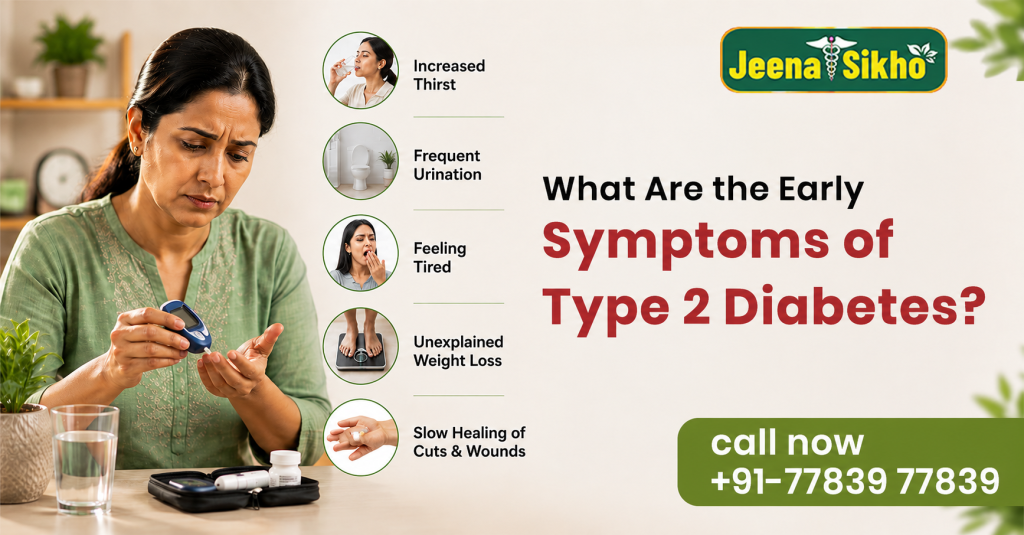
- Feeling thirsty more often than usual: Reaching for water way more than before, even on a normal day. High blood sugar pushes out through urine, and water goes with it, that’s what keeps your throat feeling dry.
- Frequent urination, especially during the night: Kidneys work overtime to flush out extra sugar. That means more trips to the bathroom, often worse at night, right when you’re trying to sleep.
- Constant tiredness even after proper rest: Sleep a full eight hours and still feel drained. That’s because your cells aren’t getting the sugar they need for energy.
- Increased hunger despite eating meals: Here’s an odd one — you finish a full meal and feel hungry again soon after. The body can’t use the sugar properly, so it keeps signalling for more food.
- Slow healing of cuts and minor wounds: A small cut that would normally close in a few days now takes weeks. High sugar messes with blood flow and slows the body’s repair work.
- Blurred or fluctuating vision: Vision going blurry, then clearing up again, is worth noticing. Extra sugar pulls water from the eye’s lens, causing swelling that affects how sharp things look.
- Tingling or numbness in the hands and feet: Some call it pins and needles, others just numbness. Either way, it points to nerve involvement from high blood sugar over time.
- Sudden weight loss without trying: Losing weight without dieting sounds like good news, but it usually isn’t. Cells that can’t use sugar force the body to burn muscle and fat instead.
- Dark patches around the neck or underarms: This one shows up on the skin. Dark, slightly thick patches around the neck or underarms often point to insulin resistance sitting under the surface.
Why Do These Symptoms of Type 2 Diabetes Develop?
All of this traces back to one basic issue. Sugar stays stuck in the blood instead of reaching the cells, leaving your body low on fuel even though sugar is sitting around unused. The kidneys pick up the slack, working overtime to clear it out — that’s your thirst and extra bathroom trips right there. Blood flow and nerve function take a hit too, which explains why tingling, slow healing, and blurry vision often show up together.
The Ayurvedic Understanding of Madhumeha
In Ayurveda, this condition goes by the name Madhumeha, linked to a Kapha imbalance along with weak Agni, or digestive fire. Weak digestion lets waste material called ‘ama’ pile up over time, putting off how the body handles sugar, which lines up closely with what modern science calls insulin resistance.
Ayurvedic Treatment for Type 2 Diabetes at Jeena Sikho HiiMS
At Jeena Sikho HiiMS , the aim isn’t just to bring down a sugar reading for a while – it’s to address what’s causing the imbalance. The ayurvedic treatment for type 2 diabetes here is structured around each person’s own body and needs.
Personalised Dietary Guidance
No two diet plans look alike here. Whole grains, vegetables, and bitter foods are worked in based on the person’s sugar balance.
Panchakarma Therapies Based On Individual Assessment
Nothing is suggested without a check-up first. Once assessed, detox therapies clear toxins and support better metabolism.
Ayurvedic Herbs Selected By The Physician
Herbs aren’t handed out randomly – each is picked for the patient, under a doctor’s supervision, to support digestion and sugar levels.
Lifestyle Correction Through Yoga, Routine, And Stress Management
Daily yoga, a fixed routine, and stress management round out the plan, since irregular habits often make sugar harder to keep in check.
Conclusion
So, to sum it up – the symptoms of type 2 diabetes very rarely show up overnight. They build slowly, hiding behind everyday tiredness, which is why they’re easy to ignore generally. Catching them early gives you a real chance of avoiding bigger problems in future. Regular check-ups, better habits, and Ayurvedic support under expert guidance can go a long way in keeping this condition under control.
Jeena Sikho HiiMS offers this kind of personal Ayurvedic care for anyone who wants to understand their body better. You can also opt for a VOPD (online video consultation) for your health issue with expert doctors at Jeena Sikho HiiMS.

FAQs
Q1: Can Type 2 diabetes develop without noticeable symptoms?
It certainly can, since many people carry high blood sugar for a long time before any visible sign appears, which is why regular health check-ups matter.
Q2: Which early symptom of Type 2 diabetes is most commonly ignored?
Fatigue is known to be the most ignored sign, as people often attribute it to work stress or poor sleep rather than a change in blood sugar.
Q3: Can lifestyle changes help after the early symptoms appear?
Adjusting diet,adding daily movement, and managing stress can meaningfully support blood sugar levels once these early signs have been noticed.
Q4: How does Ayurveda explain Type 2 diabetes?
Ayurveda views this condition as Madhumeha, arising from a Kapha imbalance, weak digestive fire, and toxin build-up that disturbs the body’s metabolism.
Q5: When should someone with symptoms of Type 2 diabetes get tested?
Getting tested as soon as two or more of these signs appear together gives the best chance of catching the condition early and managing it well.