Shop Now


Good health often comes from small things done well, every single day. For example waking at the same hour, eating on time and sleeping early can shape your energy, digestion and mood. Dinacharya in Ayurveda is built on this simple idea. It offers a clear plan for the day, from the first sip of water to the last thought before sleep.
Modern research also points to the power of routine. A large study published in the journal Sleep followed 60,977 adults. People with the most regular sleep had a 20–48% lower risk of early death than those with the least regular sleep. This blog explains what Dinacharya means, the 10 habits it recommends, and how to start them.
What Is Dinacharya in Ayurveda?
The word comes from two Sanskrit words. ‘Dina’ means ‘day’, and ‘charya’ means ‘routine’ or ‘conduct’. In fact, classical texts such as the Charaka Samhita and Ashtanga Hridaya describe it as the base of preventive health.
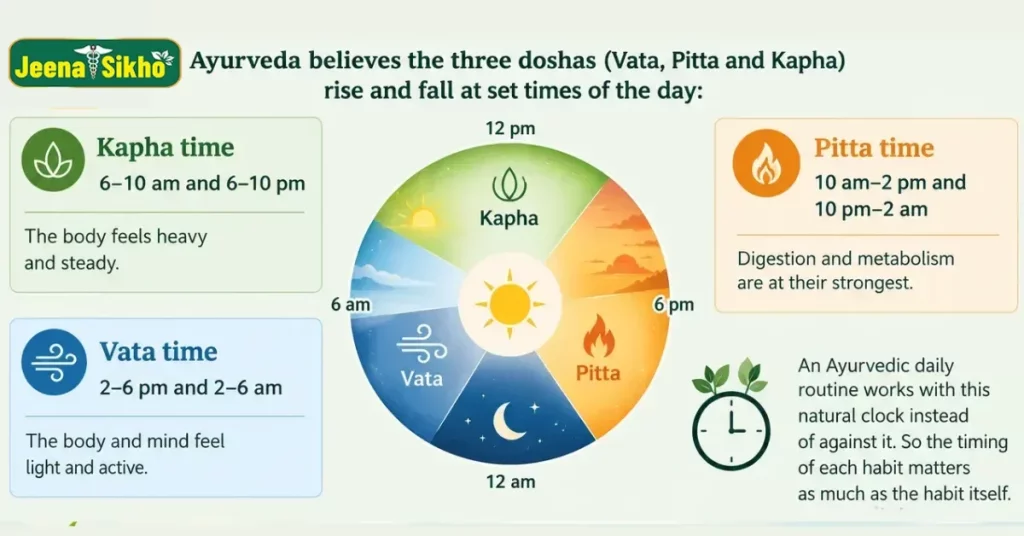
Ayurveda believes the three doshas (Vata, Pitta and Kapha) rise and fall at set times of the day:
- 6–10 am and 6–10 pm: Kapha time. The body feels heavy and steady.
- 10 am–2 pm and 10 pm–2 am: Pitta time. Digestion and metabolism are at their strongest.
- 2–6 pm and 2–6 am: Vata time. The body and mind feel light and active.
An Ayurvedic daily routine works with this natural clock instead of against it. So the timing of each habit matters as much as the habit itself.
Want to know which routine suits your body best? Take our Prakriti Test to understand your Vata, Pitta, and Kapha dosha and find a daily routine that aligns with your unique body constitution.
10 Daily Habits in Ayurveda for Healthy Living
Daily habits in Ayurveda follow the natural order of the day. Each one supports your digestive fire and helps prevent toxic residue left by poor digestion. Here is how dinacharya in Ayurveda shapes the day, step by step.
1. Wake Up Early (Brahma Muhurta)
Ayurveda suggests waking about 1.5 hours before sunrise. This falls in Vata time, when the mind is calm, fresh and alert. If that feels difficult, begin with small steps. Wake 15–20 minutes earlier each week until it becomes natural.
2. Drink Warm Water and Clear the Bowels
A glass of warm water gently wakes up the digestive system. It also helps the body clear waste from the night before. Ayurveda sees easy morning elimination as a key sign of balanced digestion. Avoid reaching for tea or coffee first thing, because they can dry the system and unsettle Vata.
3. Clean Your Tongue and Teeth
A white coating often builds up on the tongue overnight. Gently scraping it with a copper or steel scraper (Jihva Nirlekhana) removes it. After that, brush your teeth. Traditionally, people used neem or babool twigs which are bitter and astringent.
4. Practise Oil Pulling (Gandusha)
Take a spoonful of sesame oil and swish it around your mouth for 5–10 minutes. Then spit it out and rinse with warm water. A randomised trial in the Indian Journal of Dental Research tested this on 20 teenagers with gum inflammation. After 10 days, sesame oil pulling clearly reduced plaque and gum swelling, much like a medicated mouthwash. The study was small, but the results are encouraging.
5. Use Nasya (Nasal Oil Drops)
First, warm a little Anu Taila or ghee, then put 2 drops into each nostril. Ayurveda calls the nose the doorway to the head. So this practice is traditionally used to keep the nasal passages moist and support a clear, calm mind.
6. Give Yourself an Oil Massage (Abhyanga)
Massage warm oil into your body for 10–15 minutes before bathing. Sesame oil suits Vata, coconut oil suits Pitta, and a light or dry massage suits Kapha. A pilot study on Abhyanga found that one session lowered stress levels and heart rate in 20 healthy adults.
7. Exercise to Half Your Capacity (Vyayama)
Ayurveda advises exercising until light sweat appear on your forehead. This is about half your full strength. It builds stamina without draining you. Morning, during Kapha time, is the best window, since the body feels heavy and benefits from movement. Yoga and pranayama, such as Anulom-Vilom, fit well here.
8. Bathe and Meditate
A lukewarm bath refreshes the body and removes the oil from your massage. After that sit quietly for 10 minutes of meditation. This sets a calm, focused tone for the rest of the day. Even a few minutes of slow breathing helps on busy mornings.
9. Make Lunch Your Main Meal
Digestion is strongest during Pitta time, between 10 am and 2 pm. That is why Ayurveda makes lunch the biggest meal of the day. On the other hand, keep dinner light and eat it at least 2–3 hours before bed.
10. Sleep Early
Above all, try to be in bed by around 10 pm. After this, Pitta time begins again, and the body shifts to repair and digestion. Going to bed at the same time every night also builds the kind of regular sleep that the research above links to better health.
You don’t need to follow all 10 habits from day one. Each habit brings its own value, even when practised alone.
Not sure where to begin with these habits? Our Ayurvedic team can help you.

How to Start Your Ayurvedic Daily Routine Without Feeling Overwhelmed
A new routine works best when it grows slowly. These simple steps make it easier to stay consistent:
- Start with 2–3 habits: Warm water, tongue scraping and an early dinner are easy first steps. Once they feel natural, add one more habit each week.
- Keep timings fixed: Wake, eat, and sleep at the same times even on weekends. In dinacharya in Ayurveda consistency matter more than perfection.
- Match the routine to your body type: Vata types benefit from daily oil massage and warm meals at fixed times. Pitta types do well with cooling oils and never skipping lunch. Kapha types feel better when they wake earlier and exercise more actively.
- Adjust with the seasons: Ayurveda calls this Ritucharya. For example use more oil in winter and lighter food in summer.
- Follow simple cautions: Skip Abhyanga during fever or indigestion. Avoid Nasya right after meals or during a heavy cold.
Conclusion
Dinacharya in Ayurveda turns everyday moments into steps toward better health. It follows the natural dosha clock from early waking and oil pulling to a light dinner and early sleep. These 10 habits support digestion, calm the mind, and bring rhythm to the day. Starting small and staying consistent makes an Ayurvedic lifestyle easy to follow for anyone.
Build a daily routine that suits your body with guidance from Jeena Sikho Ayurvedic experts. Book a VOPD (video consultation) and get expert advice from the comfort of your home.
FAQs
Q1. What is the best time to wake up according to Ayurveda?
Ayurveda recommends waking during Brahma Muhurta, about 1.5 hours before sunrise. If that’s hard, any fixed early time is a good start.
Q2. Can I follow Dinacharya with a 9-to-5 job?
Yes. Morning habits like warm water, tongue scraping, and oil pulling take under 20 minutes. Keeping meal and sleep times fixed matter most.
Q3. Which oil is best for daily Abhyanga?
Sesame oil suits Vata, coconut oil suits Pitta, and a light or dry massage suits Kapha. Warm the oil slightly before use.
Q4. How long does it take to feel the benefits of an Ayurvedic routine?
Many people notice better energy and digestion within a few weeks of regular practice. Result depend on how consistent you are.
Q5. Is Dinacharya the same for everyone?
The basic habits are the same, but details change with your body type and the season. An Ayurvedic expert can help you adjust them.