Shop Now
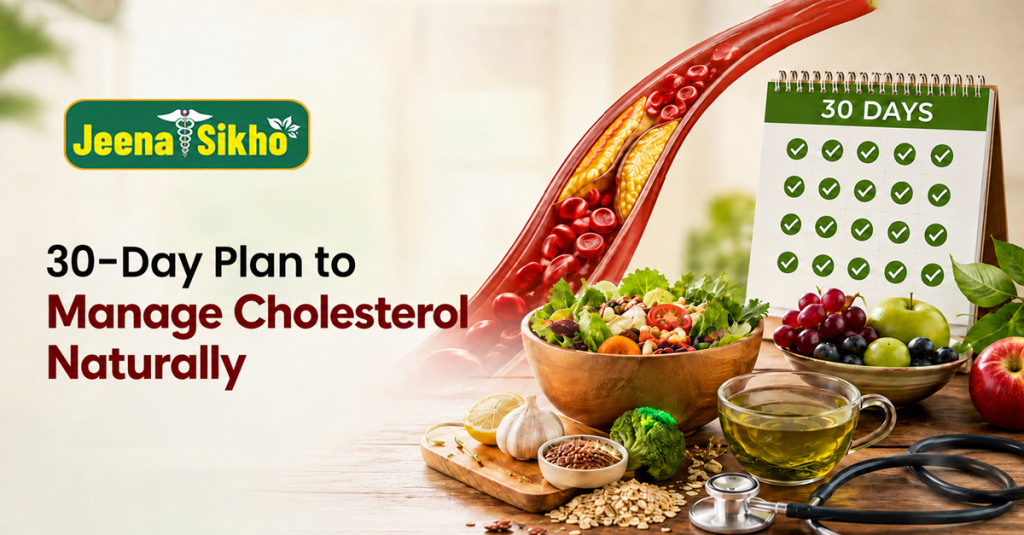
Red numbers on a cholesterol report don’t have to mean a lifetime of panic and pills right away. How to lower cholesterol naturally really comes down to small, consistent shifts, diet, movement, a bit of Ayurvedic support, stacked over weeks. Not overnight magic.
This plan breaks things down week by week, so you’re not trying to fix everything on day one. Meant to work alongside your existing medical care, not instead of it, especially if you’re already on medication for this.
What Causes Cholesterol to Rise in the First Place?
Ayurveda frames high cholesterol as an imbalance in Medo Dhatu, basically your body’s fat tissue, caused by Ama, toxin buildup, sitting on top of a weakened Agni, your digestive fire.
Digestion slows down over time, fat stops getting metabolised the way it should, and that shows up on your next blood test as rising cholesterol. Excess Kapha plays into this too, heaviness, stagnation, the whole sluggish pattern. Which is exactly why this plan spends as much time on digestion as it does on cutting fatty food.
30-Day Plan to Manage Cholesterol Naturally
Week 1: Building the Foundation
The first week of any cholesterol management plan is really about getting the basics right, not overhauling your whole life at once.
- Days 1 and 2, swap cold water for warm, all day. Ayurveda considers cold water genuinely harder on digestion and fat metabolism.
- Days 3 and 4, processed food and refined oils, gone, replaced with fresh, home-cooked meals.
- Days 5 through 7, start mornings with a teaspoon of soaked, chewed fenugreek seeds, and add a daily 20-30 minute walk.
Week 2: Bringing in Herbal Support
Basics feeling manageable? Week two of this 30-day cholesterol management plan brings herbs into the picture.
- Triphala powder with warm water before bed, traditionally leaned on for digestion and detox.
- Guggul, generally best taken under some guidance, is known for supporting fat metabolism.
- Digestive spices worked into daily cooking, cumin, coriander, and fennel, either mixed into food or brewed as a warm tea after meals.
Worth checking with an Ayurvedic practitioner before starting any of these, particularly if you’re already on cholesterol medication.
Week 3: Movement and Managing Stress
Natural ways to lower cholesterol aren’t just about what’s on your plate; movement and stress genuinely factor in too.
- Push that daily walk up to a brisk 30 minutes, enough to work up a light sweat. Add 10 minutes of pranayama or basic breathing exercises each morning.
- Prioritise 7-8 hours of sleep, since poor sleep disrupts fat metabolism more than people realise.
- And Arjuna bark powder with warm water or milk, traditionally used to support heart health specifically.
Week 4: Making It a Lasting Habit
The final week isn’t about adding anything new. Just staying consistent.
- Keep the diet, herbs, and movement from the last three weeks going, no skipped days.
- Sit with which habits actually felt sustainable, and which ones you’d want to adjust going forward.
- Get a follow-up lipid panel done too, ideally at the same lab, so you’re comparing numbers on a level playing field.
Is 30 Days Even Enough to See Real Change?
Realistically, it’s a solid start, not a finish line. Most people who stick with a consistent Ayurvedic approach notice gradual improvement between 6 and 12 weeks, depending on where they started and how consistently they’ve actually been.
This plan builds the habit foundation. The real payoff tends to show up well past the first month, if you keep going.
How to Maintain Healthy Cholesterol Levels Long-Term
Understanding how to maintain healthy cholesterol levels once these 30 days wrap up comes down to one thing, mostly, not dropping the habits the moment numbers improve. Warm water and home-cooked meals stay the default, not something reserved for occasional effort. Keep the movement going, even 20-30 minutes most days adds up over months.
And don’t skip regular checkups, tracking your lipid panel periodically tells you whether what you’re doing is actually working, or needs adjusting.
How Jeena Sikho HiiMS Approaches This
At Jeena Sikho HiiMS, cholesterol support usually starts with a personalized, pH-balanced diet plan, cutting salt, oil, dairy, and animal-based food, leaning instead on raw fruits, vegetables, and whole grains, aimed at supporting metabolic balance and digestion.
Paired with herbal formulations suited to the individual’s constitution and current cholesterol levels, plus guidance on daily routine and stress management. All of it is built to sit alongside whatever medical treatment you’re already on, not replace it.
Conclusion
How to lower cholesterol naturally really comes down to consistency, diet, digestion, movement, and stress, all working together rather than chasing one quick fix. This 30-day plan gives you a genuine starting structure, but the real, lasting change comes from sticking with these habits well past the first month.
If you need a personalised plan built around your specific numbers and constitution, you can book a VOPD consultation with Jeena Sikho HiiMS and talk it through with our team.

FAQs
1. Can I run this plan alongside my prescribed cholesterol medication?
Yes, but tell your doctor about any herbs or lifestyle changes first, so everything stays coordinated and safe.
2. How soon will my cholesterol numbers actually shift?
Most people see gradual movement over 6 to 12 weeks of staying consistent, not necessarily within the first 30 days alone.
3. Does warm water genuinely beat cold water for cholesterol?
Ayurveda holds that warm water supports digestion and fat metabolism better; cold water’s believed to slow that process down.
4. Can stress actually move the needle on cholesterol?
Yes, chronic stress disrupts fat metabolism and can genuinely contribute to elevated cholesterol over time.
5. Should Guggul and Arjuna be taken together?
Not necessarily, a practitioner can tell you which herb actually fits your case rather than combining everything by default.