Shop Now


What Is a Headache?
According to the Mayo Clinic’s overview of headache causes, a headache is pain or discomfort in the head, scalp, or upper neck. A headache could be described as a dull, pressing, tightening or throbbing sensation. Headaches can be experienced occasionally or on a regular basis. For this reason, frequent headaches may become a problem because they can interfere with daily activities such as work and sleep.
There are many causes that might lead to headaches. They include poor sleep, stress, dehydration, long hours in front of computer screens, and irregular food intake. Sometimes, however, a headache might be associated with migraines, tension-type headaches or some other health problem.
It is important to identify the pattern of your headache. Observe when it begins, how long it lasts, where the pain takes place and what triggers its appearance.
Why Are Headaches So Common Nowadays?
The current routines expose individuals to many headache triggers during the day. Nevertheless, the causes of headaches are not always associated with the way of living of an individual.
One of the reasons may be stress. The work-related stress, family issues, and constant mental activity may cause muscle tension and can lead to a headache.
Sleep disorders can also influence the appearance of the disease. Lack of sleep, frequent changes in the sleep schedule or bad quality sleep may become the reason of a headache. Missing meals and lack of fluid intake can also contribute.
Long periods of time spent in front of the screen can influence negatively as well. Spending much time in front of the computer screen or phone screen can cause eye strain, decreased blinking, and incorrect neck position. These factors may cause discomfort and a headache.
The UK National Health Service (NHS) discusses factors such as caffeine withdrawal, specific foods, hormonal changes, and weather changes that can contribute to headaches. In case of migraines, there can be special triggers which differ from other patients’.
If headaches occur frequently, become more severe, or interfere with daily activities, consult our specialists to identify the underlying cause and explore suitable treatment options.

What Are the Different Types of Headaches?
Headaches do not feel the same for everyone. Knowing the common types of headaches, as described by the World Health Organization (WHO) can help you describe your symptoms more clearly.
- Tension-Type Headache
It normally manifests itself in the feeling of constriction or pressure in the forehead and back part of the head. Things that might lead to this kind of headache include stress, muscle tension, poor body posture, and long working periods.
The migrainous headache involves moderately severe to extremely severe throbbing pain. The pain might affect just one part of the head and might cause the vomiting, sensitivity to sound and light, and eye problems.
- Cluster Headache
Cluster headaches cause severe pain, usually around one eye or one side of the head. They may occur in repeated attacks over a period of time. Eye watering or a blocked nose on the painful side may also occur.
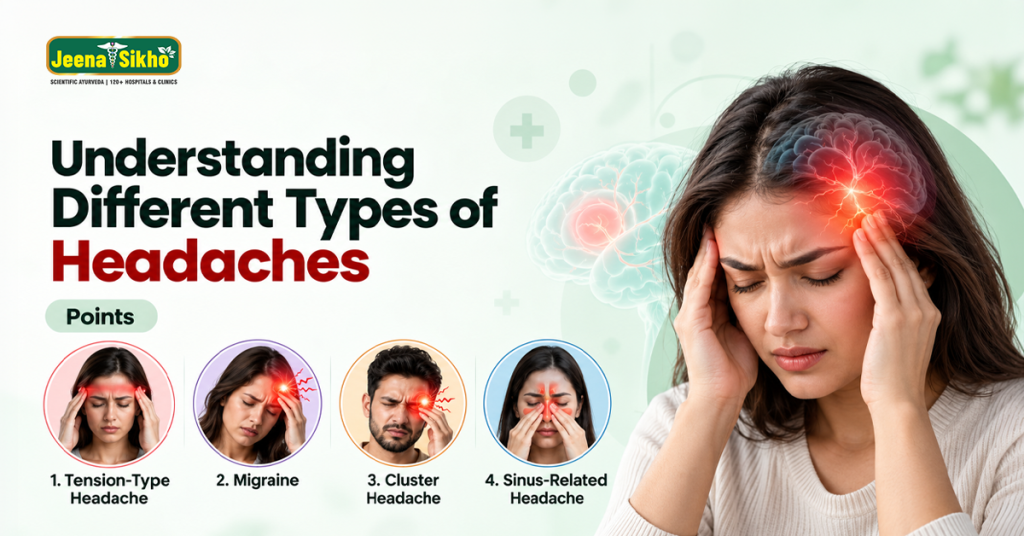
- Sinus-Related Headache
Pressure around the forehead, cheeks, or nose may occur with sinus inflammation. However, migraine can also cause facial pressure and nasal symptoms, so not every headache around the sinuses is caused by a sinus problem.
The type of headache matters because the right approach depends on its cause, symptoms, and frequency.
Common Lifestyle Triggers of Headaches
Some everyday habits may contribute to headaches. Identifying your common causes of headaches can help you make useful changes.
- Excessive use of screens: Do short pauses while working on computers. Change the brightness level of the screen and position the screen in a comfortable height to minimise unnecessary neck strain.
- Poor sleeping habit: You should try to have a sleep and wake pattern that you follow. A bedtime routine may help in having good sleep.
- Dehydration: Water intake should be done regularly and especially during the summer days or while working out. Your water intake will depend on your lifestyle and health condition.
- Gaps between your meals: Sometimes gaps between meals can lead to headaches. It is crucial to make sure you follow a healthy diet and have proper eating habits.
- Stress and muscle tension: Stretching, deep breathing, walks, and breaks will help you to deal with stress.
- Caffeine overuse: Caffeine overuse can cause headaches, as well as reducing the amount of caffeine, which can result in the same outcome. In case you wish to reduce the consumption of caffeine, it should be done gradually.
A headache diary is useful for monitoring your sleeping habits, food intake, time spent looking at the screens, stress level, and headache symptoms. In such a way, you can find out some patterns and discuss them with a health care provider.
How Ayurveda Approaches Headache Management
Headaches are talked about in terms of the traditional Shiroroga, which stands for any kind of ailment relating to the head. In Ayurveda, various patterns of head pains and the influence of digestion, daily regime, sleep, stress, and individual constitution are taken into account while preparing treatment.
In addition to this, there is also a traditional Ayurvedic approach to the balance between Vata, Pitta, and Kapha. These concepts can be applied by an experienced Ayurvedic practitioner to analyse patient’s symptoms and routine. They should never be viewed as a replacement for medical diagnosis.
Based on what a person requires, Ayurvedic treatment can involve advice about food habits, sleeping patterns, stress management, and gentle yoga, as well as herbal products. Whether herbs would be appropriate to use for an individual or not depends on several aspects, including the health of that person, the medication he/she uses, and others. Herbs can provoke side effects and adversely affect the use of medication. The National Center for Complementary and Integrative Health (NCCIH) overview of Ayurvedic medicine also explains important safety considerations.
Evidence for Ayurvedic approaches to different headache conditions varies. The safest approach is to combine appropriate medical assessment with suitable lifestyle support.
Ayurvedic Lifestyle Tips for Headache Prevention
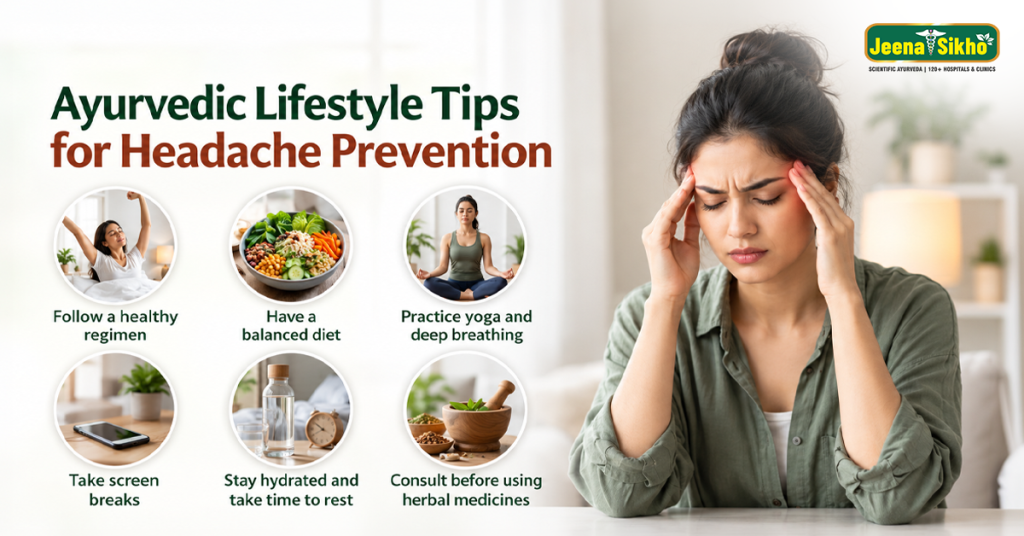
Ayurvedic medicine emphasises the need to follow a healthy routine which includes proper food, adequate sleep, and other activities that would make you healthy. Some simple things would go a long way in helping you reduce some of the causes of headaches.
- Follow a healthy regimen: Try to keep your sleep, eating, and working time consistent. You should neither remain awake till late nights nor go hungry or eat late.
- Have a balanced diet: Include all the fresh vegetables, fruits, whole grains, pulses, and proteins in your diet. In case if some foods trigger headache attacks, exclude them from your eating plan. Still, you should not follow an unhealthy diet without proper reasons.
- Practice yoga and deep breathing: Light exercise, deep breathing, or meditation may help you cope with stress and muscle tension. Only choose such exercises as suit you.
- Take screen breaks: During long periods of computer work, look away from the screen regularly, relax your shoulders, and adjust your posture.
- Stay hydrated and take time to rest: Drink enough water during the day and rest when you feel exhausted. When the glare of light or noise causes you to develop headaches, taking some time to rest in a quiet room may be beneficial.
- Consult before using herbal medicines: All natural substances cannot be deemed safe. The services of a professional should be sought to determine which particular herbs will suit you.
When Should You Seek Medical Help?
If you experience a headache that is very severe, starts suddenly, happens after a head injury, or is accompanied by weakness, confusion, loss of consciousness, difficulty speaking, high fever with stiffness of the neck, sudden vision problems, seek immediate medical help. Any change in your headache pattern should also be assessed by a doctor. Book a free consultation with Jeena Sikho HiiMS for personalised health guidance and support.

Conclusion
Frequent headaches may become more common when daily life includes stress, irregular sleep, dehydration, skipped meals, and long screen hours. Identifying your trigger points and having a consistent regimen may help you cope better. Ayurvedic medicine has a time-tested solution for you where they can customise their plan for you, including lifestyle advice, relaxation techniques, and medication. Nevertheless, you must not overlook the recurring and severe cases.
FAQs
1. Why am I having frequent headaches?
The reasons for getting headaches could be anything like stress, insomnia, dehydration, not eating food, looking at the computer screen, migraines, or diseases. You can take help from a medical expert in this regard.
2. What lifestyle factors can help me prevent headaches?
Good sleep, regular eating habits, proper fluid intake, rest from the screen, exercise, and stress management can help in dealing with common causes of headaches.
3. Is there any benefit in taking Ayurveda for headache relief?
There are some facts that prove that some people use Ayurveda treatment for their headache relief, which involves changing their lifestyles and Ayurvedic treatment.
4. Can I cure any headache by using herbs?
No. The herbs can cause some adverse reactions or interact with medicines. You should consult a professional medical specialist about the option of herbal therapy for you.
5. When do I need to visit a doctor because of headaches?
One should visit a doctor if headaches become more frequent and more severe, they affect your daily routine, or they occur with some new symptoms.